
West Melbourne Previous Resident Sources
Previous residents leave different kinds of evidence at different times. Start with the current West Melbourne parcel card, because its account number and legal description keep the land tied together even when a mailing city or street wording changes. The Brevard County Clerk then supplies the recorded ownership chain. Occupants who never owned the property may instead appear in Melbourne-area directories, a public census schedule, permits, or a death and probate trail. The table separates what each source can actually prove.
| Source | Years It Covers | Where Held | What It Shows |
|---|---|---|---|
| Official Records online | January 1, 1981 to present | Brevard County Clerk | Deeds, grantors, grantees, dates, plats and legal descriptions |
| Older deed books and indexes | Before 1981 | Clerk branch, research request or archive | The ownership chain before the web index |
| BCPAO property roll | Current roll and displayed sale history | Brevard County Property Appraiser | Owner, situs, mailing address, parcel and land facts |
| Melbourne-area directories | Exact local years require a shelf inquiry | State Library and Brevard Libraries | Listed occupants, addresses and sometimes work or spouse clues |
| Federal census | Public schedules through 1950 | NARA and library databases | Household members and relationships at an enumeration place |
| West Melbourne permits | Online start not verified | City Building Department or records request | Work dates, applicants, owners and contractors |
For a recent transfer, use the BCPAO Property Search and the Clerk’s Official Records. For a question from before the web cutoff, keep walking the deed chain through books or clerk research. When the goal is to identify past residents rather than owners, ask the State Library or county library which directory volume covers that street and year. A census can then confirm a full household, but only for an open schedule.
Begin West Melbourne Records With Land
A street address is useful, but the BCPAO parcel number and legal description are safer links across time. The property card distinguishes the situs, meaning the physical assessment address, from the owner’s mailing address. Matching addresses can support an owner-occupancy theory, yet they do not prove who slept there. A different mailing address may simply show where the owner receives tax mail.
Save the seven-digit account, formatted parcel ID, owners, situs, legal description, subdivision or block, and each displayed sale. A parcel may even lack an assigned situs while retaining owners, sale facts, a map position, and a legal description. That local quirk is why the land identity should guide a West Melbourne previous residents search.
MapView adds aerials, subdivisions, blocks, dimensions, and sales-year layers. Its lines are informational, not survey-grade. Use them to orient the search, then rely on the parcel Details screen and recorded instrument for the facts.
Note: A homestead exemption is consistent with owner occupancy, but it never identifies renters, relatives, or every member of a household.
Trace West Melbourne Past Owners
The chain of title is the sequence of recorded transfers for the same land. Trace it from the present owner backward, checking the legal description at every link. The Clerk indexes names as they appear on documents, so spelling variants and fewer search terms often recover a missed result. The online index is free and needs no password.
- Pull the present owner, parcel ID, legal description, and sale references from BCPAO.
- Open the newest deed by instrument number or search the current owner in Official Records. Confirm the parcel description.
- Take the grantor, the seller, and search that person as an earlier grantee, or buyer.
- Repeat the check through January 1, 1981. Never treat the web cutoff as the beginning of ownership.
- For earlier transfers, ask the Clerk for the right grantor-grantee book, microfilm, branch access, or paid research.
- Grantor and grantee
- The grantor transfers the interest; the grantee receives it.
- Chain of title
- The linked series of transfers for one parcel.
- Legal description
- The recorded land identity, often a lot, block, subdivision, or survey description that outlasts postal changes.
The Clerk’s index can show party roles, recording date, document type, instrument number or book and page, and legal-description references. Eligible images may be saved or printed. Protected images and older material require another access route, but the record may still exist.
West Melbourne's 1981 Records Divide
January 1, 1981 is an exact digital boundary in Brevard County. Online Official Records index data and legally displayable images begin there. Earlier deeds did not vanish. They remain in books, indexes, microfilm, and staff-retrievable holdings. This is the key local quirk for anyone tracing previous residents through a long ownership history.
The Clerk’s public-record request routes include an online request portal, email, phone, mail, and counter service. Requests may be anonymous, and Florida law generally does not require a stated purpose. Give the parcel description, likely parties, document type, and date range so staff can identify the right medium.
Ordinary copies cost $1 per page, and certification costs $2 per document. Extensive research can be quoted separately. The image below shows the official request route used when a past-resident trail crosses beyond a free web result.
View Brevard Clerk public-record request options.
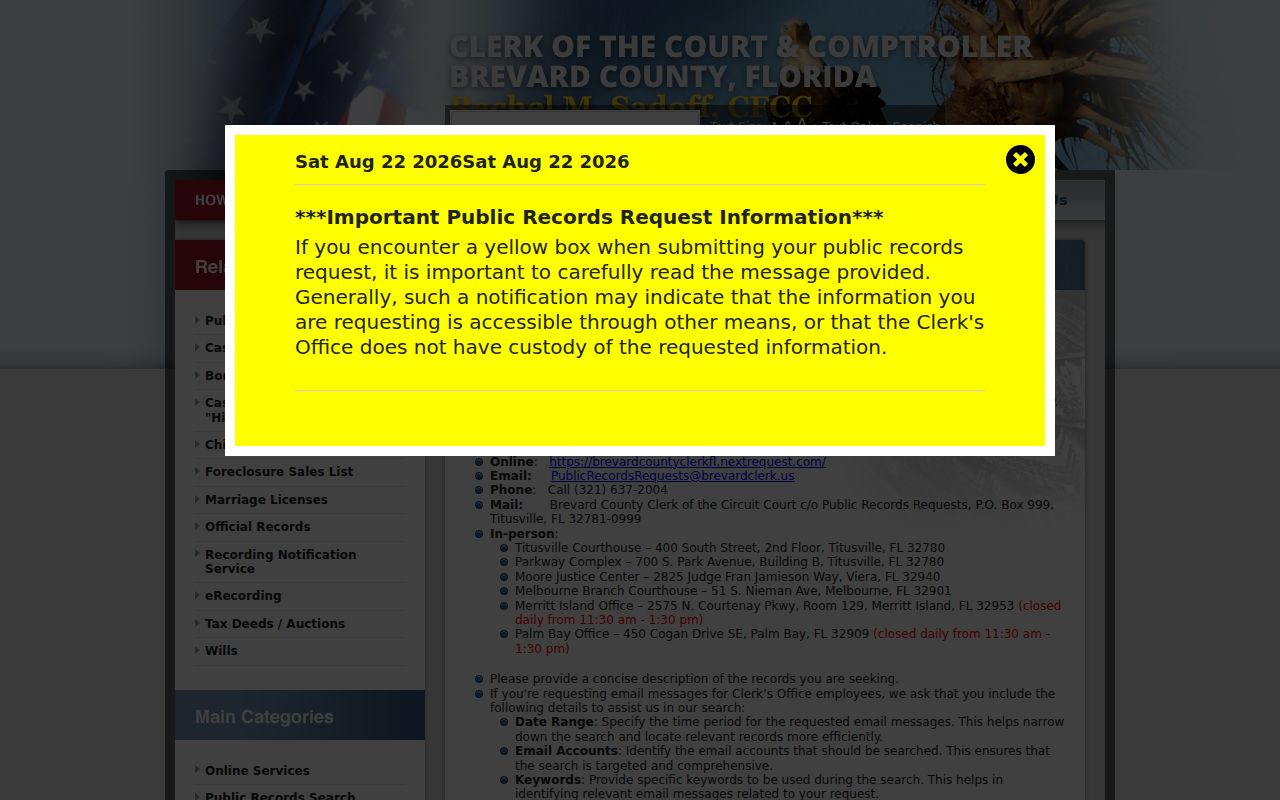
The request page keeps older research tied to the official custodian rather than treating an empty online result as proof that no deed exists.
West Melbourne Residents Under Old Headings
West Melbourne incorporated in 1959, more than a century after Brevard County’s creation. Older land, probate, marriage, and court evidence is therefore county-centered. Directory and newspaper searches also need Melbourne-area terms. A present parcel can predate city jurisdiction, and “Melbourne” in a mailing line does not settle whether the property lies within West Melbourne.
Use the subdivision or plat name, parcel legal description, and city-boundary layer when the city label changes. West Melbourne grew largely in the automobile and subdivision era. That makes plats, aerials, permits, and post-1981 deeds especially strong sources. It also means there is no sound basis for inventing a long standalone West Melbourne directory run.
For pre-incorporation research, search Melbourne, the subdivision, and the legal description. Check every directory volume’s geographic key before deciding that a street was inside or outside its scope.
Date a West Melbourne House
A permit can place an owner, applicant, contractor, type of work, issue date, final date, and inspections at a property. It is dated evidence of activity, not proof that the named person lived there. West Melbourne’s Building Department page routes requests by service, but the research did not confirm a complete public historical index or its start year.
When an online search does not expose the old permit, use the West Melbourne public-record request. Ask for an existing permit register by address, parcel number, work type, and date range. Florida Chapter 119 also permits oral or anonymous requests, though a precise scope helps limit extensive labor charges.
Compare permits with BCPAO sketches, property photos, sales history, and dated aerial layers. The sequence can show when a structure or addition appears. It cannot, by itself, name all previous residents.
Note: No official citywide street-renumbering year or West Melbourne house-history guide was found, so do not invent either one.
Match West Melbourne Past Households
Deeds name owners, not all occupants. Melbourne-area city directories can add a listed resident, spouse, occupation, and address. A criss-cross directory reverses the usual arrangement and lists entries by address. Exact local volume years were not exposed in the official online catalog, so contact the State Library city-directory collection or Brevard Libraries before travel. The collections and abbreviations are covered more fully in the West Melbourne city directory section.
Pair the address evidence in a set order:
- Start with one known address and year, then photograph the directory title page, coverage note, and abbreviation key.
- Check both the name section and any street or reverse section. Search OCR by surname variants and street number.
- Move one volume at a time, logging the first appearance, move, work change, spouse change, and disappearance.
- Bracket 1950 with nearby directory years, then compare the public census household and enumeration location.
- Use deeds for ownership and probate or a verified obituary when a listing ends.
The federal census is open through 1950 under the 72-year rule. It may show household names, relationships, ages, birthplaces, occupation, and location. Later schedules remain closed. The Brevard Historical Commission can also help with local maps, photos, and vertical files when a directory shelf is thin.
Lawful use. Research previous residents for house history, family history, estate work, or personal curiosity. Never use an address trail to watch, harass, threaten, or harm a living person.
Close West Melbourne Resident Trails
When a former owner dies, probate can connect the decedent, personal representative, estate filings, and sometimes heirs. Search the Brevard Clerk’s BECA case index, then request allowed documents from the Clerk if the online image is missing. A docket is the dated list of filings and events in a case. It can establish that a file exists even when a sensitive document is sealed or redacted.
Obituaries, newspapers, funeral-home notices, and cemetery material can add relatives and dates. Treat family-submitted facts as leads until an official certificate, deed, or court file confirms them. Florida birth certificates less than 125 years old are confidential and limited to eligible requesters. Cause-of-death information is restricted for 50 years.
The state’s vital-record application list shows the proper forms for lawful orders.
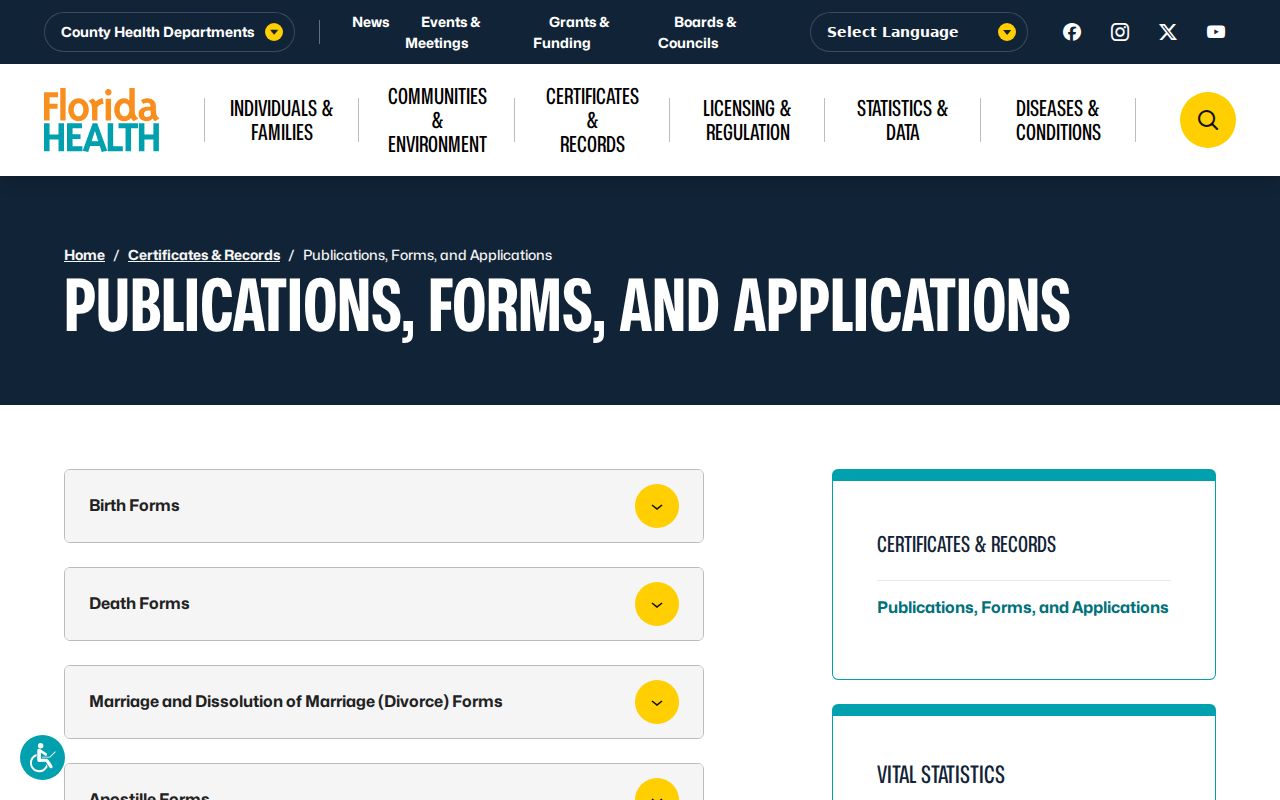
Those forms distinguish certificate access from the public clues found in deeds, directories, and probate.
West Melbourne Past Resident Birth Evidence
A birth record can confirm a life event, but it is not an open address directory. Florida law protects births less than 125 years old. Eligible people may order through the Florida Bureau of Vital Statistics or use authorized local and mail channels with the required identity and relationship proof.
The official Florida birth-certificate page explains eligibility and order routes.
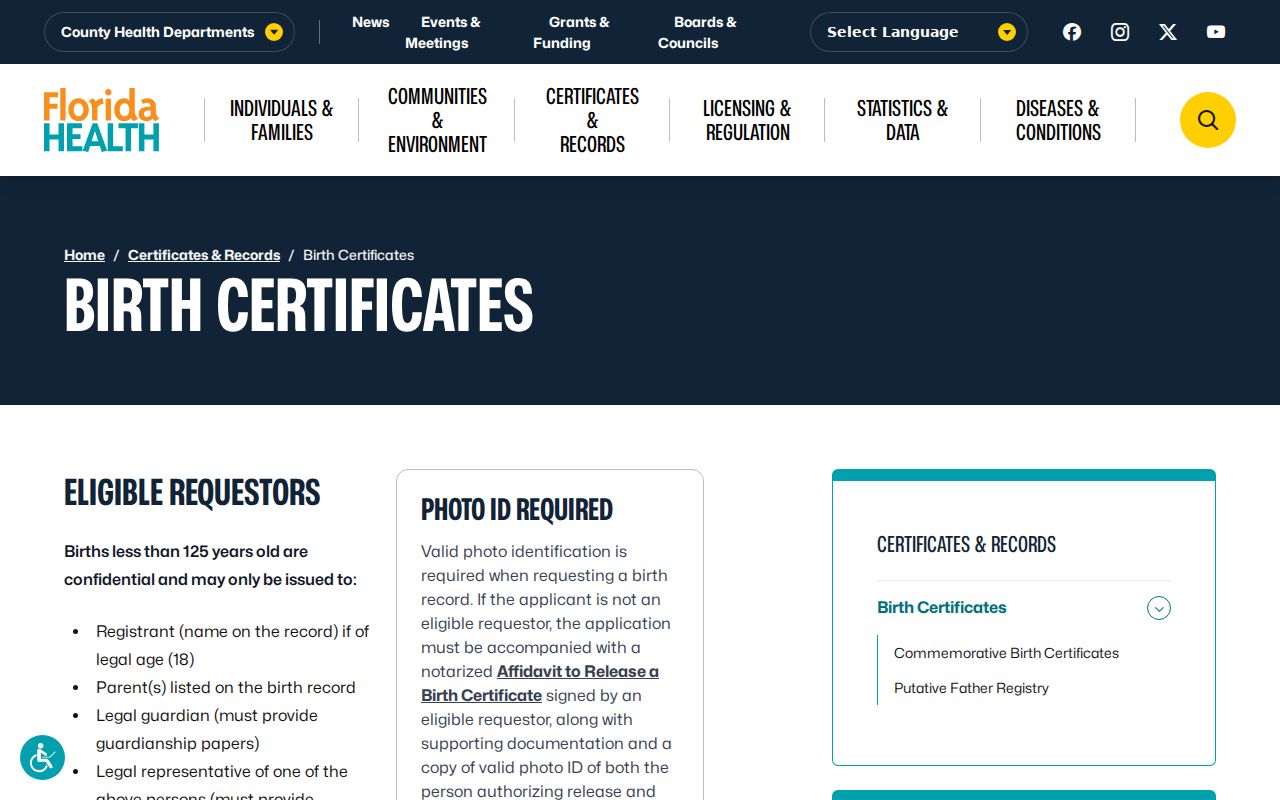
Use a certificate only when lawful access is available, and keep its private fields out of a public address-history file.
For an older family line, the Florida State Archives, county libraries, and verified genealogy catalogs may supply indexes or related sources. Record the exact catalog title and access restriction before relying on it. This preserves the line between a useful lead and an official record.